Addis Globe – September 9, 2020.
Ethiopia is a home to multi-ethnic groups each having unique culture and tradition with commonalities among them. Likewise, the costume varies from tribe to tribe with likeness in some kind. Thus, one can comprehend not only biodiversity, but also the cultural diversity which is the underlying cause of the beauty of the nation.
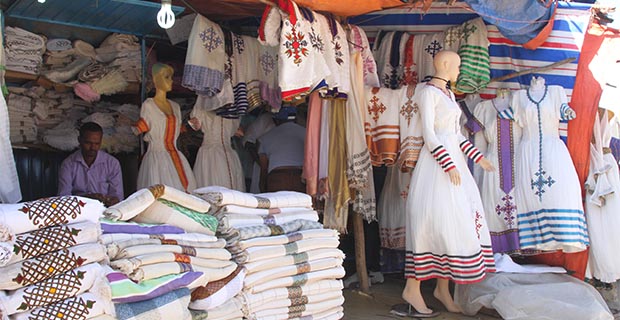
Habesh Kemis (Habesha Dress) is a traditional Ethiopian clothing originating from the northern part of Ethiopia and has been worn in Ethiopia and Eritrea for centuries. It is handwoven and made from cotton fabric and typically comes in white, gray and beige colors. It is worn with a shawl called Netela which is much thinner than the dress and worn around the shoulders and arms or tied on the waist. It varies slightly depending on the part of the region it is from. It is especially worn during celebrations and holidays. The peak season for Habesha dresses is usually during Timket (Ethiopian Epiphany) more than Enkutatash (the Ethiopian New Year). The traditional dressings are common during holidays and occasional festivities.
The dress is traditionally ankle length and decoratively embroidered with Tilet, shiny threads, around the bottom and down the middle of the dress. The embroidery on the dress is matched with the embroidery on the shawl giving the outfit an elegant traditional look. The shawl is also made in bright colors to match any other outfit.
Some central and northern areas, women’s traditional clothes are often made from cloth called shemma. It is basically cotton cloth, about 90 cm wide, woven in long strips which are then sewn together. Sometimes shiny threads are woven into the fabric for an elegant effect.
The production process of the Habesha dress is difficult, time consuming and labor intensive. Due to this reason, the price of the clothes is high compared to casual clothes. It takes about two to three weeks to make enough cloth for one dress. The bottom of the garment or shirt may be ornamented with patterns. Usually, Habesha dress cost around 3,000- 10,000 birr depending on their design and the quality of materials.
When making a Habesha dress, the cotton is first spun into yarn by the Dewari. Then it goes to a Shemane (weaver), who makes the traditional clothes. And then there is the hand sewing of the different types of colorful patterns or Tibeb into the dress. This entire process, depending on the discipline of the workers and the design, takes about 20 – 25 days to make one Habesha dress. The material is cotton and there are different kinds such as saba, fetil, menen, weldeyes, etc.
The demand for Habesha dress is seasonal. People buy Habesha dress when they have to attend special occasions such as religious holidays and weddings. Foreigners and Ethiopians living abroad may need the clothes as well.