A number of players helped bring about peace including the UAE, which should benefit from its control of a strategic Red Sea port.
By Dr Jennifer Riggan and Dr Amanda Poole | www.middleeasteye.net | July 24, 2018
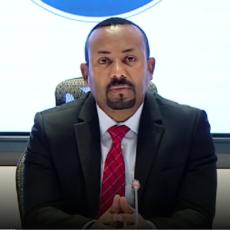
On 9 July 2018, in a historic meeting in the Eritrean capital, Asmara, Ethiopia’s prime minister, Abiy Ahmed, and Eritrea’s president, Isaias Afewerki, signed an agreement on peace and friendship, officially ending their almost two decades-long cold war. To reach this point, on 5 June, Ethiopia finally accepted a peace agreement that both countries had signed 18 years earlier.
Following two weeks of what appeared to be total silence, in his 20 June Eritrean Martyrs Day speech, President Afewerki responded favourably to Prime Minister Ahmed. Since then, events have proceeded rapidly.
A game changer
Following an emotionally evocative visit by a high level Eritrean delegation to Addis Ababa, Prime Minister Ahmed travelled to Asmara. The prime minister’s visit to Asmara was rife with symbolism and emotion as thousands of Eritreans filled the streets of Asmara while Eritreans and Ethiopians in Ethiopia were visibly moved as they witnessed images of the Ethiopian and Eritrean flags flying together.
Most significantly, within moments of signing the agreement, phone lines between the two countries opened up for the first time in 20 years, connecting people across borders to a momentous historical event. On 15 July, President Afwerki visited Ethiopia for the first time in 22 years, coinciding with the opening of the old Eritrean embassy in Addis Ababa.
Commentators, analysts and diplomats have hailed the peace agreement as a game changer that will lead to openness, benevolence and cooperation benefiting Eritrea and Ethiopia, the Horn of Africa, and Africa and the Middle East more broadly.
The emotional significance of this moment of peace between the two countries cannot be dismissed nor can its potential. It mends broken friendships and sutures together ruptured identities. It allows Eritreans and Ethiopians to think of each other as brothers and sisters and gives many citizens of both countries a much-needed and long-awaited sense of hope.
But does everyone stand to gain from peace between Ethiopia and Eritrea? The benefits are potentially greater to some than to others.
Arab allies’ role
At the centre of peace negotiations is the sleepy southern Eritrean port of Assab bordering Djibouti at the mouth of the Bab-el-Mandeb strait, strategically located at the southern mouth of the Red Sea.

The United Arab Emirates has expressed a keen interest in Assab and stands to gain a great deal from Eritrean and Ethiopian cooperation over port usage. Ethiopia is Africa’s second most populous country and one of its fastest growing economies.
With a burgeoning textile industry, the country has been desperate for expanded sea access. Prior to the beginning of the border war with Eritrea in 1998, Assab served as Ethiopia’s main port. Since the war began, Ethiopia invested heavily in Djibouti but has found that arrangement insufficient for its growing industries.
Although Assab is an indisputable part of Eritrean territory, the fact that Eritrea’s northern port of Massawa is sufficient for its shipping needs meant that Assab largely fell into disuse when the border war broke out until the United Arab Emirates leased it in 2015.
While reports show that UAE has developed the port for military use related to the war in Yemen, the port has a great deal of untapped commercial potential. Thus, UAE is well positioned to benefit once Ethiopia begins using the port to its full potential.
It is not surprising that UAE is reported to be a key player in the peace deal although the specifics of its role are not entirely clear
A number of actors played a key role in bringing about peace, most notably Ethiopia and Eritrea themselves. Arab allies also played a key role. Saudi Arabia and UAE, on good terms with both countries, played a bridging role between the two. It is not surprising that UAE is reported to be a key player in the peace deal although the specifics of its role are not entirely clear.
The Eritrean president visited UAE in early July just as peace was being negotiated. And UAE recently gave Ethiopia $1bn to alleviate currency shortages, a move that coincided with the resumption of Ethiopian diplomatic relations with Eritrea. One of the five provisions of the recently signed agreement on peace and friendship notes the opening up of the port for Ethiopian use.
Left in the cold
Meanwhile, other stakeholders may fare less well in the peace agreement.Djibouti, arguably, may be unhappy with these arrangements having provided Ethiopia with a port since 1998. Assab has been effectively isolated since the border war began, giving Djibouti something of a monopoly over strategic control over the Bab-el-Mandab strait and enabling it to attract key investments and political alliances.
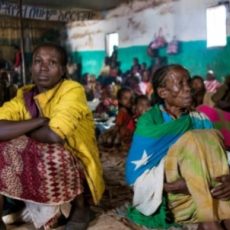
But there are others who will potentially be left in the cold as Eritrea and Ethiopia warm up to each other. While Ethiopians have been gleefully waiting to board flights to Eritrea, Eritreans in Eritrea are unsure whether they will be allowed to leave and Eritrean refugees in Ethiopia are wary of whether the country will be a place that they can ever return to.

It is expected that peace between the two countries will lead to economic benefits to both Eritrea and Ethiopia as commerce, trade and tourism crosses the border. Ethiopian airlines flights to Asmara resumed on 18 July and were full, but social media reports suggested that only 80 people were on the return flight.
Given Eritrea’s travel restrictions, it is not surprising that there would be much more traffic to Asmara than from it. To leave Eritrea legally, Eritreans are required to have exit visas, which are almost impossible to acquire. Many welcome an open border if it leads to increased mobility for Eritreans, but this will require the Eritrean government to alter longstanding practices of restricting population movements. Unlike Ethiopians, Eritreans may not benefit from these newly opened travel routes.
There is no doubt that peace between Eritrea and Ethiopia will change things in the region giving Ethiopia much coveted sea access, boosting the economies of both countries possibly to the benefit of its Arab allies such as UAE. But closer to home, peace raises a number of questions that have yet to be answered as Eritreans wonder whether peace will benefit them.
– Dr Jennifer Riggan is Associate Professor of International Studies at Arcadia University.
– Dr Amanda Poole is Associate Professor of Anthropology at Indiana University of Pennsylvania. Both have been researching Eritrea for two decades.
Source: http://www.middleeasteye.net/columns/who-stands-gain-and-lose-peace-between-ethiopia-and-eritrea-891710415